










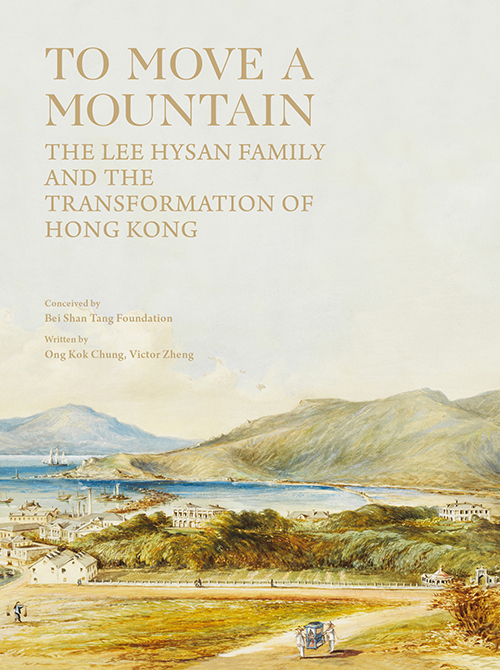
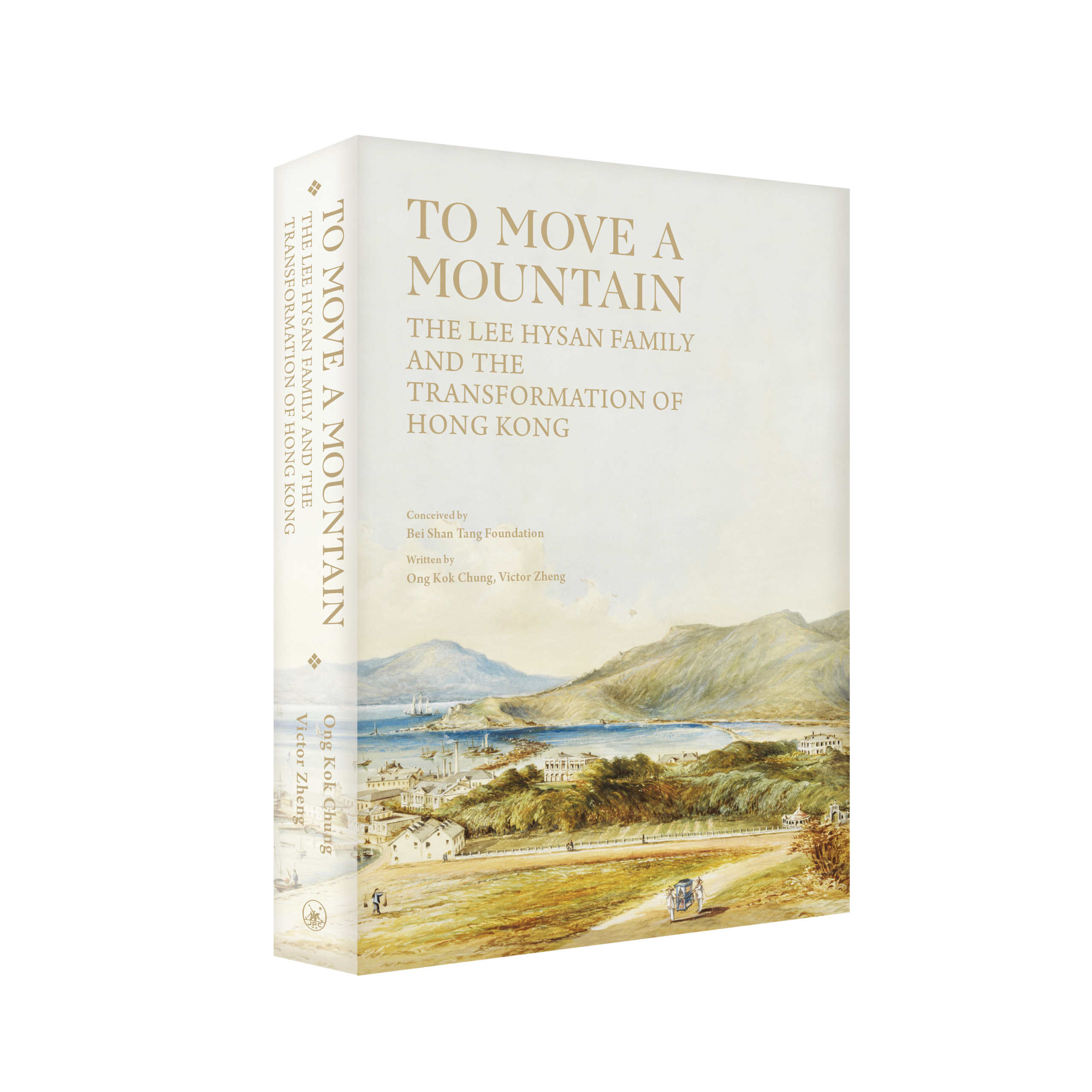
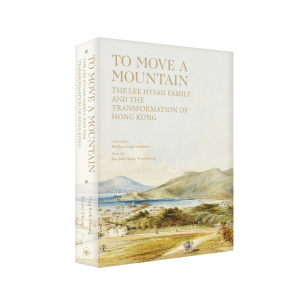
To Move a Mountain: The Lee Hysan Family
簡介
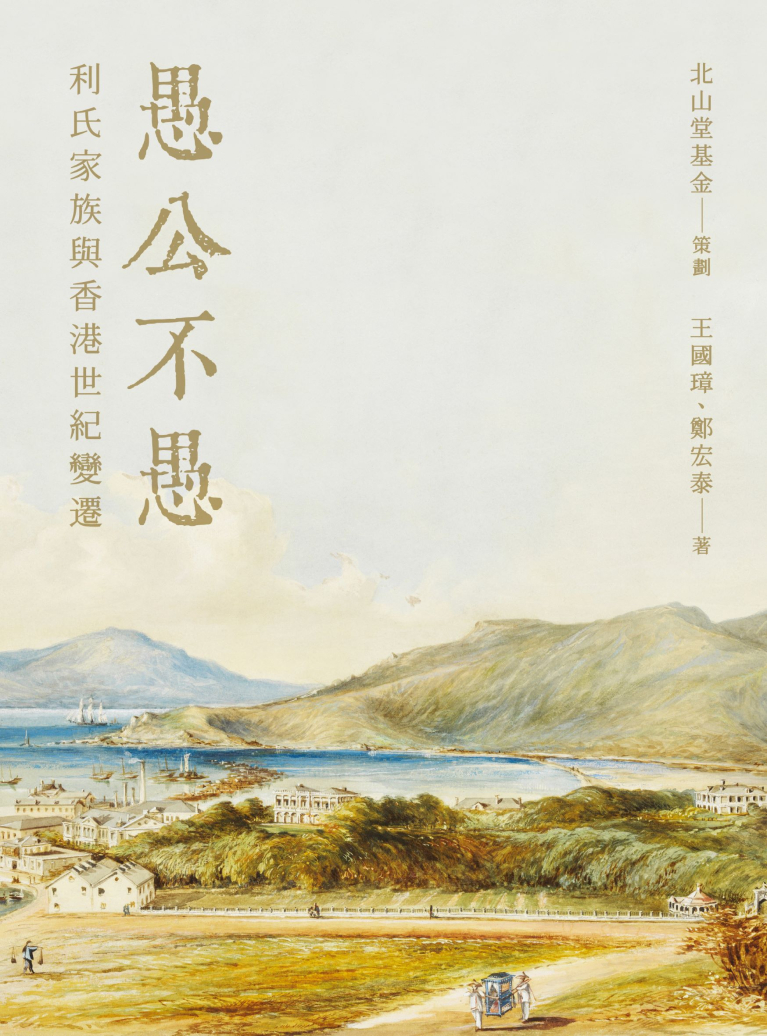
Beyond the opium trade and Causeway Bay — two things most synonymous with the Lee Hysan family — there is a great deal more to their riveting story: how the family established roots in Hong Kong, their ebbs and flows through the turbulent twentieth century, their rise to prominence, their businesses, as well as engagements in public affairs, philanthropy and support for arts and culture… Painstakingly combing through numerous boxes of archival records and hours of interviews, this book traces the story back not only to the year 1924 when the momentous decision was made by Lee Hysan to purchase a hill in Causeway Bay, but also to his formative years (when his father first brought him across the Pacific to America, and later to Hong Kong), piecing together his countless ups and downs, lawsuits, financial troubles, and his eventual assassination, this gives us an intimate portrait of Lee Hysan as a person. In the years following Lee Hysan’s death, led by his wife Wong Lan Fong through many challenges — financial woes, war, separation, resistance, times of upheaval — the next generation of the Lee family rose to the occasion time and again, exhibiting tremendous constancy and fortitude in turning adversities into opportunities.
This book is as much a historical sketch of Hong Kong as it is the biography of a legendary family. Lee Hysan’s monumental vision to level the once-hilly Causeway Bay, to use that dug-up earth to reclaim land, develop the site and build an entire family empire, not only parallels the fable “Simpleton of the North Mountain” — especially the part where it was Lee Hysan’s sons who, many years later, finally persevered and brought his vision to fruition — but also mirrors Hong Kong’s own ever-kaleidoscopic century: from its deep Chinese roots, to its colonial years, Japanese occupation, and ultimate growth and rise during and after the Cold War. More importantly, throughout this transformation, Hong Kong has never lost its grip on its strategic importance as an East-meets-West nexus. Today, Causeway Bay is one of Hong Kong’s premier and most vibrant neighbourhoods — a fact that clearly shows Lee Hysan possessed the foresight and audacity that few others would ever dream of having; and in this very place where many opportunities have been created, the Lee family legacy continues…
目錄
Foreword
Building Dai Uk
License to Deal
Traces of England
Causeway Bay — A Serendipitous Crossing
Unfulfilled Ambition
Keeping Business Going
Accumulating Power
Into the War of Resistance
Wartime Diaspora
Reinvigorating the Family Business
Moving the Mountain!
Industrial Development
Choices of the Times
Legacy of Benevolence
Quiet Contributions
A Transpacific Family
Appendix: Genealogy of Lee Hysan Family
Bibliographies
Interview Record
作者簡介
Dr. ONG Kok Chung is currently an independent researcher. He holds a Master’s degree from National Taiwan University and a PhD from the University of Hong Kong. He has authored five monographs and biographies and has also translated several publications.
Dr Victor ZHENG is currently Director of Centre for Social and Political Development Studies, Chinese University of Hong Kong (CUHK). He is also Co-Convenor of the Global China Research Programme, Co-Convenor of Policy Research @ HKIAPS, Director of Telephone Survey Research Laboratory, Associate Director of Centre for Contemporary China’s Cultural Studies, and Associate Director of the Hong Kong Institute of Asia-Pacific Studies, CUHK. His research interests cover Chinese family business and inheritance, trust and family office, business culture and history, and China’s soft power and global China studies. He serves as a board member of International Society for the Studies of Chinese Overseas, and an editorial board member of East Asia: An International Quarterly, National Identities, and Twenty-first Century bimonthly.
序
My grandfather was Lee Hysan, but I never had the chance to meet him. Those interested in Hong Kong history must have heard about his life which is legendary in a way that is almost unimaginable today. Over a hundred years ago, a little boy barely ten years old from Kaiping, sailed across the ocean to America to join his father, Lee Leung Yik. While trying his best to learn English, he also had to adapt to an entirely new culture. There has always been an assumption that my great-grandfather was sold into slavery in America, unaware that he had a pretty good life back home and had a supporting network of Chinese immigrants in America which helped him to be able to own and run a business there.
After about six years abroad, Lee Hysan returned to China with Lee Leung Yik and settled in Hong Kong, an emerging city under the influence of both East and West. Lee Hysan was enrolled at the highly prestigious Queen’s College, where he began to cultivate his own social network.
These experiences profoundly influenced his thinking, his perspective, and his attitudes. Lee Hysan began his career at several trading companies, establishing strong connections with both Chinese and foreign businesses. He also made numerous investments, including real estate, shares, and even an amusement park and movies. Decisiveness coupled with innovative thinking made him capable of making bold moves when it came to business.
Having studied overseas, Lee Hysan thoroughly appreciated the importance of knowledge and Western culture and values. This inspired him to send not only his sons, but also his daughters to study in England, which was quite unusual at the time. Furthermore, he also helped found a local girl’s school to promote gender equality in education in Hong Kong. As a champion of Chinese culture and traditions, he promoted classical Chinese studies, art and culture. Among his pioneering moves was encouraging Chinese people to engage in sports.
Lee Hysan’s involvement as a licensed dealer in the opium trade marked a turning point in his life. He accumulated a vast fortune through this business which enabled him to make one of his largest investments: purchasing a hill on Hong Kong Island. However, it also led to two major legal battles and ultimately his assassination.
During his short 49-year lifespan, he not only built his business, but also a lasting family legacy that continues to guide our family’s journey in Hong Kong today.
Upon grandfather’s death, my grandmother, Wong Lan Fong, was left to care for a large family including three concubines and their offspring. Her unwavering fairness and love toward all helped her lead the family to emerge from its debit crisis, overcome the ravages of war when they had to flee to the Mainland and finally to enable the family to rebuild the business when they returned to Hong Kong. If you knew that grandmother was an illiterate girl with bound feet from Taishan in Guangdong Province, you would be even more amazed by her story.
Back then, the decision to buy a hill, flatten it and build housing on the site is likened to the famous ancient Chinese fable of “Simpleton Moves the Mountains”. In our case, after generations of effort, the hill was finally leveled and transformed into the Lee Gardens area of Causeway Bay that we can see today. As the Lee family has grown over the past century, many younger Lees have settled abroad and have little knowledge of our family’s history. However, many have expressed a desire to learn about their family’s past, and to explore the stories of Lee Hysan and our hometowns of Kaiping and Xinhui as well as stories about other Lee family members.
My cousin Vivienne Poy was the first in our family to realize how important it was to record our family history. Based on her personal research and interviews of senior family members, she published A River Named Lee and Building Bridges, two invaluable contributions to the understanding of our family history. The autobiography of my third aunt, Ansie Lee Sperry, entitled Running with the Tiger also contains valuable first-hand information from a senior family member.
As government and public records became more accessible, Dr. Victor Zheng Wan Tai, a scholar with a keen interest in local Chinese businessmen and family history, wrote Opium King: Lee Hysan and Son of Hong Kong: Richard Charles Lee. By providing new perspectives and information, these books reignited the interest in some of the family’s unsolved mysteries.
We have searched through the family records, many of which were preserved by my late father, Lee Jung Sen, and have found hundreds of handwritten letters and telegrams from Lee Hysan, along with pre-war family letters and company documents. As each new finding filled in gaps in our understanding of our family history, the story has become more complete. I was therefore inspired by these new findings to have a more comprehensive book written about our family. During this process, Dr. Victor Zheng Wan Tai’s professional and open-minded attitude towards historical research convinced us he was ideal to lead this project. Following Dr. Zheng’s agreement to be the author of this book, he immediately invited Dr. Ong Kok Chung, an independent scholar, to join him as co-author.
Since the summer of 2020, we have been diligently organizing our family’s archive and piecing together the stories of our ancestors. It is because of the information discovered from our research that we now consider Lee Leung Yik and not Lee Hysan as the first generation of our family in this book. We also included stories about our grandmother Wong Lan Fong and many of the third generation, subjects which had previously not been covered in books published to date.
Drs. Zheng and Ong, with their rigorous scholarly approach, spent much time on their research, uncovering new evidence about various long-held theories about our family (such as Lee Hysan’s location and date of birth and his “formative years” in the United States and Hong Kong). Their account skillfully incorporates this information within the broader historical and sociopolitical context of Hong Kong and Mainland.
Not surprisingly, this book turned out to not only be a historical account of our family history but also a history of modern Hong Kong. It has taken about four years of hard work for the Chinese edition to come to fruition, and I am deeply grateful for the professionalism and dedication of both authors. I am even more delighted that the English edition has now been completed.
Along with existing government archives and family collections, we gathered a great deal of new information from various institutions’ archives during the research process. For their generosity and provision of valuable archival materials, I would like to thank the staff of the HSBC Archive, the Swire Archive Centre, the Jardine Matheson Archive at the Cambridge University Library, the Shanghai Commercial & Savings Bank, Archives of Macao, and the South China Athletic Association.
I would also like to thank Dr. Cheung Ngai Yee of Bei Shan Tang Foundation and Zachary Lee, a fifth-generation family member, whose tireless efforts have been instrumental in the preparation of this book, collection and organization of all archival materials, coordination, interviews, and revision of both Chinese and English manuscripts. Thanks also goes to Mr. Gershom Tse, the English copyeditor of this book, who ensured that the English edition is as elegant and vivid as the Chinese one.
As a final note, I would like to thank my family, especially those members who were interviewed as part of this project. We received many precious photographs and stories from them and were told a lot about the lives of the previous generations. Several friends of family members were also interviewed. Thanks also go to them for sharing memories of my relatives. Many of these interesting stories were new to me. Not only did they allow me to understand the shared values of my elders, but their stories also helped me grasp how each forebearer navigated through the challenges and opportunities presented to them in their time.
Akin to the Chinese fable about the “Simpleton” and his wisdom, the Lee family has shown remarkable resilience for over a century. Through thick and thin, our family continues to thrive, growing stronger with each generation. Our family’s heritage, forged through a blend of Eastern and Western values, has guided us through many changes and challenges which I believe is, and will continue to be one of the most precious qualities of our family.
Chien Lee
December 2025