

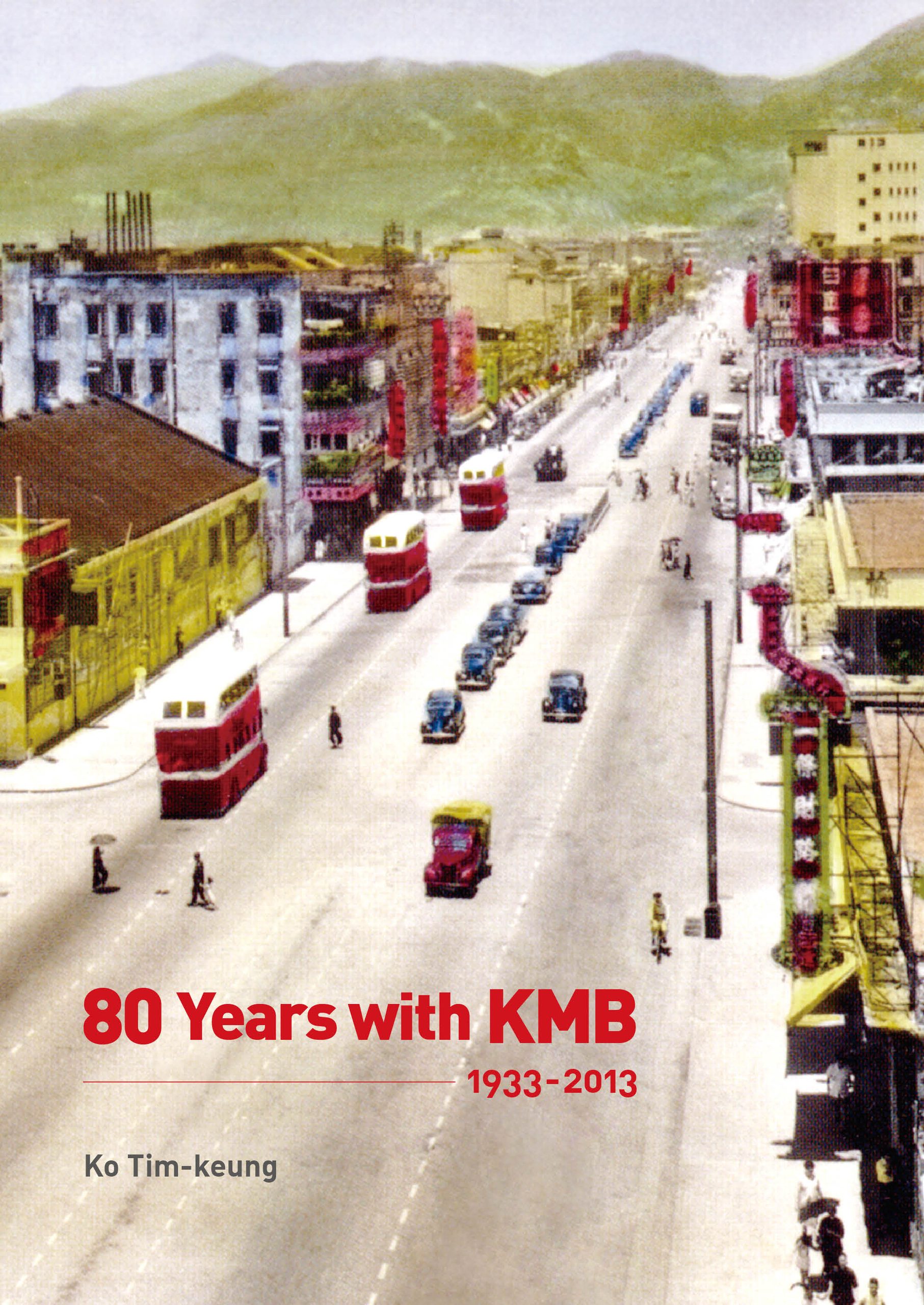
80 Years with KMB (1933-2013)
簡介
Founded in 1921, Kowloon Motor Bus Company operated 9 Ford buses on 2 routes in Kowloon. When it gained the franchise to operate bus services in 1933, it owned 110 small single-decker buses and ran a total of 18 routes in Kowloon and the New Territories. On its 80th anniversary of obtaining the franchise, KMB now has a fleet of 3,800 buses and operates 392 routes in the territory, employing about 12,000 people. It offers about 2.6 million out of a total of 12 million public transport trips per day in Hong Kong. That means 1 out of 4 to 5 people commutes by KMB on a daily basis. In addition to the railway, KMB is the most widely used means of transport in Hong Kong. These figures illustrate the profound development of KMB which is extraordinary when compared with public transport in other world cities.
Throughout the years, KMB and the people of Hong Kong have weathered the ups and downs together – the Japanese Occupation, the population surge after the war, two civil disturbances, natural disasters, the development of new towns, the opening of the railway as well as cross-harbour tunnels, etc. In the tiny city of Hong Kong where people have to commute frequently, public transport that is both convenient and reliable is vital to urban development.
In this book, the author has employed a large quantity of archival data and historical photographs to explore the relationship between the government’s transport and city planning policies, as well as the advancement of KMB. The book is informative and can serve as a reference on the development of the local bus industry.
目錄
Foreword Dr Joseph Ting Sun-pao 006
Preface Ko Tim-keung 008
Chapter 01 Development of Kowloon and early bus services 010
Chapter 02 Beginning of franchised bus services 030
Chapter 03 World War II and Kowloon bus services 040
Chapter 04 Beginnings of an industrial city 054
Chapter 05 Development of the New Territories after the war 088
Chapter 06 The Ten-year Housing Programme and development of new towns 098
Chapter 07 New circumstances and challenges 130
Chapter 08 Outlook for the future 148
Appendix 1 Bus routes, timetable and fares in Kowloon and
the New Territories stated in the Government Tender (1932) 158
Appendix 2 KMB bus routes (1950s-1970s) 164
Appendix 3 KMB bus routes (2013) 166
Appendix 4 KMB milestones 168
Appendix 5 KMB’s organisational chart 174
Appendix 6 The floor plan of a KMB depot 176
Appendix 7 Bus models 178
Acknowledgements 190
About the author
Ko Tim-keung is a Hong Kong history and historical photo researcher. He is a member of the Antiquities Advisory Board and a former council member of the Royal Asiatic Society (Hong Kong Branch). His publications include Ruins of War: A Guide to Hong Kong’s Battlefields and Wartime Sites, Serving Hong Kong: The Hong Kong Volunteers, A Sense of Place: Hong Kong West of Pottinger Street, Sewerage and Flood Protection: Drainage Services 1841-2008, etc.
About KMB
In 1921, Lui Leung and his fellow Taishan townsman William Louey Sui Tak founded KMB. Based on the model of KMB, Tang Shiu Kin, William Louey Sui Tak, Lui Leung, Tam Woon Tong and Lam Ming Fan merged Nam Hing Bus Company, Chun Hing Motor Bus & Company and Cheung Mei Bus Company (and later bought Kai Tack Motor Bus Company) to establish The Kowloon Motor Bus Company (1933) Limited and gained the franchised bus services in Kowloon and the New Territories. After the Second World War, Tam Woon Tong and Lam Ming Fan did not see any prospects and sold their shares off. They were later bought by Wu Si Chong and Yu To Sang. In 1961, not long after the franchise was extended, KMB was listed on the Hong Kong Stock Exchange. In 1980, Sun Hung Kai Properties bought 30% of KMB’s shares. After restructuring in 1997, The Kowloon Motor Bus Holdings Limited was established and became the ultimate holding company of the KMB Group and major shareholders remained unchanged. In 2005, the Kowloon Motor Bus Holdings Limited was renamed Transport International Holdings Limited.